
The value-based approach is based on data and on trust. Which raises the question, what data do buyers trust? There is a hierarchy to this, and understanding that hierarchy makes you more effective in building value models and using them to tell value stories and business cases, and in guiding decisions.
The economic buyer, the finance partner reviewing the purchase and the operations lead who will live with the result each ask where the evidence came from. Each places it somewhere between "we measured this ourselves" and "the vendor says so." In more than fifteen years of pricing and value work with over a hundred B2B companies, I have rarely seen a deal turn on whether a value estimate was precise. I have seen many turn on whether the buyer believed where it came from.
Forrester's 2026 research on business buying describes a buying journey that is becoming "more rigorous, more collaborative, and far less forgiving of claims without proof." A key question for the vendor is where the numbers in its value claims come from and what would improve the buyer's trust.
What evidence do B2B buyers trust most?
B2B buyers trust evidence they produced themselves most, and evidence a seller produced alone least. Between the two sits a ladder that holds across industries and deal sizes. This is valueIQ's framework for how buyers weigh value evidence, drawn from our own value selling and pricing work rather than from any single study.
Rung | Evidence | Why buyers weigh it this way |
|---|---|---|
1 | The buyer's own realized data | Their numbers, from their operations, after deployment. Nothing outranks it. |
2 | Outcomes from comparable peers | A company like theirs, in their industry and at their scale, got this result. |
3 | Independent analyst studies | A credible method, discounted a little because a vendor usually commissions it. |
4 | Business cases built jointly with the buyer | The buyer helped set the assumptions, so part of the answer is theirs. |
5 | Vendor calculators | Consistent, but the seller chose the formula and the defaults. |
6 | Vendor-authored claims | A number the seller produced to support the sale. |
7 | Models with no customer evidence | Internally consistent, and untested against any real customer. |
The top two rungs take time, because they depend on customers you already have. They are most useful for renewals and expansion. Rung four is different. It is the highest rung a seller can reach inside a single deal, but most sellers never get there.
Why do most business cases land in the lower half?
Most business cases sit at rung six or seven because the buyer cannot see where the numbers came from, so the buyer judges the case by who produced it. A benchmark with no source reads as a guess. An improvement assumption with no explanation reads as blind optimism. A total with no breakdown of its equations and variables, or of where their values come from, is a sort of sales hallucination.
The judgement is based on where the numbers came from, not the arithmetic. I have seen business cases with sound logic discounted on sight, and weaker ones survive review because every input could be traced. Finance teams ask one question before any other: where did this come from? A case that cannot answer this is placed low and stays there. Liam Hannaford wrote earlier this year about why buyers discount the numbers sellers bring them; the ladder shows where that discount comes from.
What moves a business case up the ladder?
A business case moves up when the buyer can check it and more importantly contribute to it.
Cite the market source behind every benchmark. An industry figure with a named source can be checked. One without a source has to be taken on trust, and trust is what the seller is trying to build. It cannot be taken for granted.
Make every assumption visible and open to challenge. Show the equation behind each value driver, and the adjustments for risk and attribution. When the buyer can disagree with one assumption, they stop disagreeing with the whole case.
Let the buyer confirm the inputs that describe their business. Headcount, volumes, current costs. Once the buyer has supplied or approved those numbers, the case contains their data as well as yours.
Do all three and a vendor claim becomes a jointly built case, rung four. Buyers trust it because part of it is theirs. Amar Dhaliwal has written about why a value story built alone rarely survives the economic buyer's review, and the ladder explains why building it together changes the result.
What does a jointly built business case look like in practice?
A jointly built business case shows, next to every number, where that number came from and who confirmed it. In valueIQ's value intelligence software, the origin of every value is traceable, with no hidden assumptions. Each is a market default drawn from a cited source, a figure the seller provided during discovery, or a number the customer confirmed. When the case is regenerated, customer-confirmed numbers are never overwritten. The buyer's finance team can trace any figure back to its source, change an assumption they disagree with, and watch the result move.
That visibility changes the conversation in the room. The review stops being an argument about whether the seller can be trusted and becomes a working session about which assumptions fit this business, which is the conversation every seller wants to be having.
How do you reach the top two rungs?
The top two rungs come from outcomes, and outcomes are built up over time. Record what each customer actually achieved, using the model that the business case is based on, so that next year's buyer can see results from a company like theirs. Carry the business case into the account after signature, so the renewal conversation starts from what was promised and what was delivered. A team that does this on every deal builds a body of peer evidence that no single business case can match.
Frequently asked questions
What is a buyer trust hierarchy?
A buyer trust hierarchy is the order in which B2B buyers weigh value evidence, from their own realized data at the top to seller-produced models with no customer evidence at the bottom. valueIQ's version, used in its value selling work, has seven rungs, and it explains why two business cases with similar numbers can be received very differently.
Why don't buyers trust vendor value claims?
Buyers discount vendor value claims because they cannot see where the numbers came from, so they judge the claim by who produced it. A seller has an obvious interest in a high number. Without cited sources and visible assumptions, the buyer has no way to tell careful work from optimism.
How do you make a business case more credible?
Cite the market source behind every benchmark, show the equation behind every value driver, and ask the buyer to confirm the inputs that describe their business. Credibility comes from the buyer being able to check the case and contribute to it, not from a larger number or a longer document.
What is a jointly built business case?
A jointly built business case is one the buyer helped create: they supplied or confirmed the key inputs and could challenge each assumption. Buyers trust it more than a case the seller built alone because part of the evidence is theirs. It is the highest rung a seller can reach within a single deal.
Why does evidence matter in value selling?
Value selling asks a buyer to pay for outcomes they have not yet received, so the argument is only as strong as the evidence behind it. A value claim the buyer does not believe does no work in the deal, however large the number.
The number is only as strong as its source
Buyers will keep ranking evidence whether sellers acknowledge the ranking or not. The sellers who come through the economic buyer's review are the ones whose numbers the buyer can trace, test and partly call their own.
See a business case built on a deal like yours, with the source of every number showing. valueiq.ai
Sources
Forrester, Barbara Winters, The State Of Business Buying: Risk-Averse Buyers Demand Proof, Not Promises, 21 January 2026.
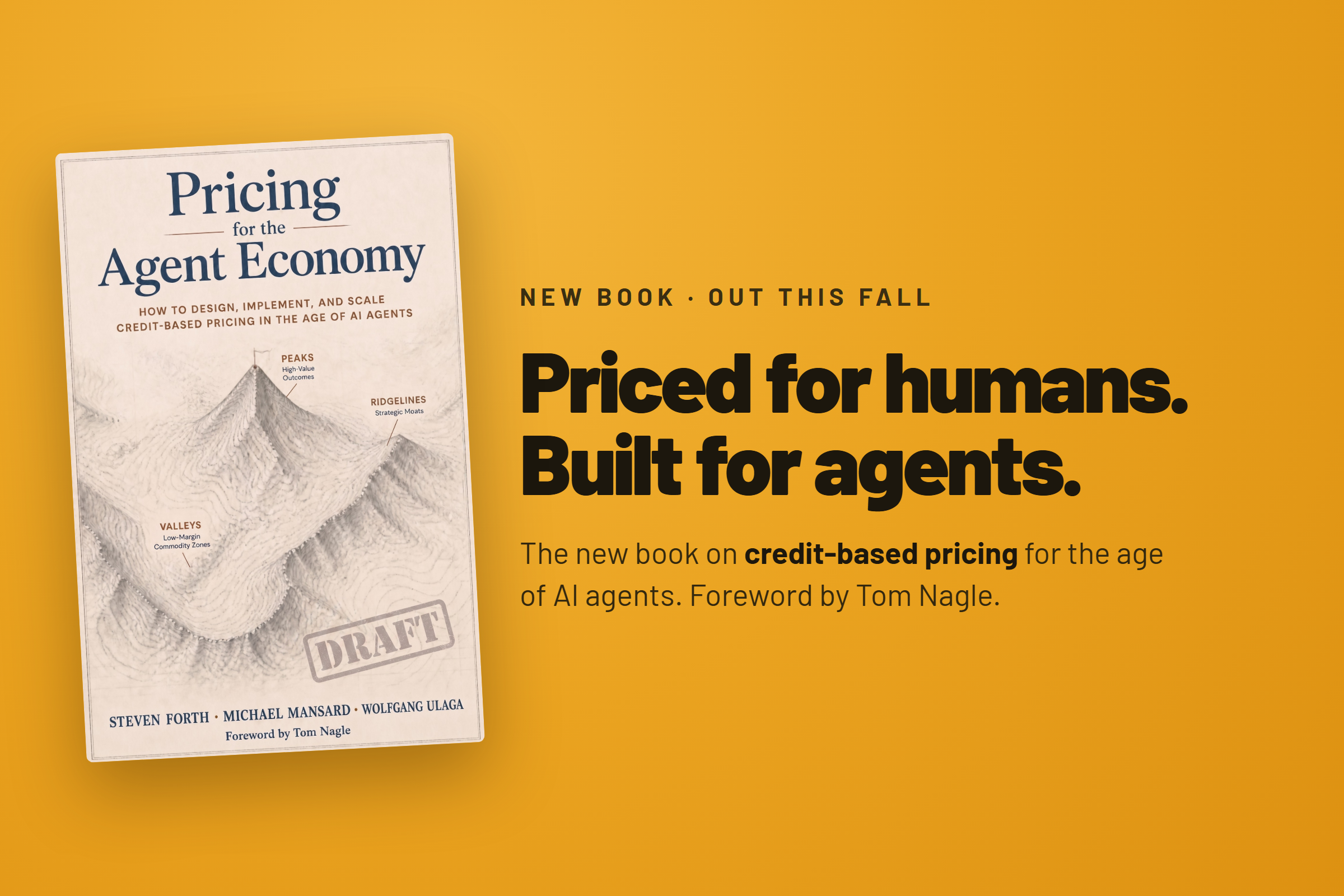
About the author. Steven Forth is a co-founder of valueIQ and has spent more than fifteen years advising over a hundred B2B companies on pricing and value. He is co-author, with Michael Mansard and Wolfgang Ulaga, of Pricing for the Agent Economy, now available for pre-order.
About valueIQ. valueIQ is value intelligence software that helps B2B software and AI companies define, quantify, price, communicate and prove the value they bring to their customers. Revenue teams use it for value selling, value management and pricing: it generates value models, executive-ready business cases, competitor value models and pricing analysis. valueIQ is the creator of the valueIQ Value Intelligence Maturity Model™. The Value Project (thevalueproject.org), an open standard for machine-readable value and pricing models, was initiated by valueIQ.